
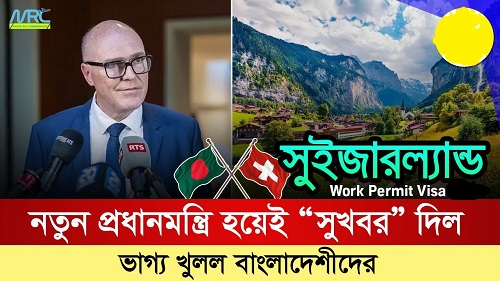
Switzerland is one of Europe’s most attractive destinations for international professionals because of its strong economy, high wages, stable employment market, and well-developed business environment. However, getting permission to work in Switzerland can be considerably more complicated than simply finding a job.
For foreign nationals, the Switzerland work permit process in 2026 depends heavily on nationality. Swiss authorities generally apply different rules to citizens of the EU/EFTA area and to people coming from countries outside the EU/EFTA.
If you are planning to work in Switzerland, it is therefore important to understand the applicable permit category, eligibility requirements, employer responsibilities, documents, application procedure, and potential costs before making travel or employment arrangements.
This guide explains how to get a Switzerland work permit in 2026, including the main eligibility requirements, required documents, application steps, salary considerations, permit types, processing issues, and common mistakes to avoid.
Important: Swiss immigration rules can change, and requirements may differ according to nationality, occupation, canton, and permit type. Always verify the latest information with the official Swiss State Secretariat for Migration (SEM), the relevant cantonal authorities, and the Swiss embassy or consulate responsible for your location.
What Is a Switzerland Work Permit?
A Switzerland work permit is authorization allowing a foreign national to work in Switzerland under specified conditions.
Swiss immigration terminology can be confusing because there are different types of residence and work permits, and the applicable rules depend on your nationality and employment situation.
Common permit categories include:
- L Permit – generally associated with short-term residence
- B Permit – generally associated with residence for a longer period
- C Permit – settlement permit, subject to separate eligibility requirements
- G Permit – cross-border commuter permit
The exact conditions attached to a permit depend on the applicant’s circumstances and the relevant Swiss legislation.
Who Needs a Switzerland Work Permit in 2026?
The first question is whether you are an EU/EFTA national or a third-country national.
EU/EFTA Citizens
Citizens of EU/EFTA countries generally benefit from the Agreement on the Free Movement of Persons between Switzerland and the EU, subject to the applicable rules.
The process for an EU/EFTA national taking employment in Switzerland can therefore be substantially different from that of a worker from outside the EU/EFTA.
For longer employment, registration with the appropriate cantonal authorities is generally an important part of the process.
Non-EU/EFTA Citizens
Workers from countries outside the EU/EFTA generally face stricter requirements.
Swiss authorities typically give priority to highly qualified foreign workers, and employers may have to demonstrate that the hiring meets applicable requirements.
This distinction is extremely important for applicants from countries such as Bangladesh, India, Pakistan, Nepal, Nigeria, the Philippines, and other non-EU/EFTA countries.
Switzerland Work Permit Requirements in 2026
There is no single requirement list for every foreign worker.
The applicable criteria can depend on:
- Nationality
- Job position
- Educational qualifications
- Professional experience
- Employer
- Salary
- Canton
- Duration of employment
- Permit category
- Swiss labour-market requirements
- Available quotas
For many third-country nationals, the applicant generally needs to be highly qualified and have the necessary professional or academic qualifications for the position.
Swiss authorities can also consider whether the position can appropriately be filled by the proposed foreign worker under the applicable immigration rules.
Switzerland Work Permit for Non-EU Citizens
If you are a non-EU/EFTA citizen, obtaining a Swiss work permit can be more challenging than obtaining employment in some other European countries.
Under the Swiss system, employers generally have an important role in the application.
In many cases, the employer must submit the relevant application to the cantonal authorities.
The authorities may consider:
- Whether the applicant is sufficiently qualified
- Whether the position requires the applicant’s particular skills
- Salary and employment conditions
- Labour-market considerations
- Applicable quotas
- Whether the employer has complied with the relevant requirements
This means that simply having a job offer does not necessarily guarantee that a non-EU/EFTA applicant will receive a work permit.
Who Is More Likely to Qualify?
For third-country nationals, Switzerland generally focuses on attracting qualified professionals.
Potentially relevant backgrounds can include:
- IT and software development
- Engineering
- Finance
- Banking
- Healthcare
- Scientific research
- Management
- Specialized technical occupations
- Other highly qualified professions
However, this does not mean that every applicant in these fields automatically qualifies.
The specific position, qualifications, employer, canton, salary, and immigration rules all matter.
Switzerland Work Permit Required Documents
The exact checklist depends on your nationality and permit category.
However, applicants may commonly need documents such as:
- Valid passport
- Completed application forms
- Employment contract or job offer
- CV
- Educational certificates
- Professional qualifications
- Evidence of relevant work experience
- Passport photographs where required
- Proof of accommodation where applicable
- Professional licenses or recognition documents where applicable
- Additional supporting documents requested by the authorities
Some documents may need to be translated, certified, legalized, or authenticated depending on their origin and the instructions of the responsible authority.
Do not assume that a document is acceptable simply because it was accepted for another country’s visa application.
Step-by-Step Switzerland Work Permit Application Process
Step 1: Determine Your Nationality Category
Start by determining whether you are:
- Swiss
- EU/EFTA
- Non-EU/EFTA
This is one of the most important factors in determining the immigration process.
A Swiss citizen obviously does not require a foreign-worker permit.
EU/EFTA citizens generally have different rights from third-country nationals.
Step 2: Find a Genuine Swiss Employer
For many employment-based immigration routes, especially for third-country nationals, finding a legitimate Swiss employer is essential.
You can search for jobs through:
- Swiss company career websites
- Reputable recruitment agencies
- Established employment websites
- Professional networks
- Industry-specific recruitment platforms
When considering a job offer, verify the employer independently.
Check:
- Company name
- Official website
- Business information
- Office address
- Job description
- Salary
- Employment conditions
- Contract duration
Be cautious about recruiters promising a guaranteed Switzerland work permit.
No private agent can guarantee that Swiss authorities will approve an immigration application.
Step 3: Make Sure the Job Meets Swiss Requirements
A job offer alone is not necessarily enough.
For third-country nationals, the position and applicant generally need to satisfy the applicable immigration conditions.
Swiss authorities can examine factors such as:
- Applicant’s qualifications
- Professional experience
- Position requirements
- Salary and employment conditions
- Labour-market considerations
- Employer circumstances
Therefore, applicants should not assume that every job advertised online can be used to obtain a Swiss work permit.
Step 4: Employer Submits the Application
For many third-country employment applications, the Swiss employer has a central role in the process.
The employer generally submits the relevant application to the appropriate cantonal authority.
The cantonal authority can assess the application and, where applicable, forward it for federal consideration.
The precise procedure can vary depending on the canton and permit category.
Step 5: Authorities Review the Application
Swiss authorities may review:
- Employment contract
- Salary
- Applicant’s qualifications
- Professional experience
- Employer information
- Labour-market considerations
- Quota availability
- Other immigration requirements
Processing can therefore take time, especially when additional documentation or approvals are necessary.
Applicants should avoid relying on unofficial claims about guaranteed approval or exact processing times.
Step 6: Apply for an Entry Visa if Required
Some foreign nationals need a visa to enter Switzerland.
If an entry visa is required for your nationality and circumstances, you may need to apply through the appropriate Swiss embassy or consulate after the necessary authorization has been issued.
Follow the specific instructions provided by the Swiss authorities.
The requirements can differ according to nationality and the type of authorization received.
Step 7: Enter Switzerland
Once you have the required authorization and, where applicable, an entry visa, you can travel to Switzerland according to the conditions of your approval.
Do not travel for employment before confirming that you have the appropriate authorization.
Step 8: Register With the Local Authorities
After arriving in Switzerland, foreign workers generally need to complete the applicable registration procedure with the local or cantonal authorities.
The timing and exact procedure can depend on your canton and permit.
You may need to provide:
- Passport
- Employment documents
- Visa or authorization
- Accommodation information
- Other requested documents
Step 9: Receive Your Residence Permit
Once the applicable registration and authorization procedures have been completed, you can receive your Swiss residence permit.
Your permit specifies the conditions under which you are allowed to reside and work.
Keep your permit valid and comply with its conditions.
Switzerland Work Permit Types
L Permit
The L permit is generally associated with short-term residence.
It can apply to certain employment arrangements of limited duration.
The exact conditions depend on the applicant’s nationality and employment circumstances.
B Permit
The B permit is generally a residence permit for longer-term residence.
It can be issued to foreign workers who meet the relevant requirements.
The rights and duration can vary depending on nationality and circumstances.
C Permit
The C permit is a settlement permit.
It is not normally the first permit a foreign worker receives.
Eligibility depends on factors such as length of residence, nationality, integration, and applicable Swiss rules.
G Permit
The G permit is generally associated with cross-border commuters who live outside Switzerland and work in Switzerland while satisfying the applicable conditions.
Switzerland Work Permit Salary Requirements
Salary can be an important consideration in a Swiss work-permit application.
For third-country workers, employment conditions generally need to comply with applicable Swiss standards.
Authorities may consider whether the salary and working conditions are appropriate for the position.
However, there is not one universal salary number that guarantees a Swiss work permit.
The relevant assessment can depend on:
- Occupation
- Qualifications
- Experience
- Location
- Industry
- Employment conditions
- Applicable Swiss rules
Applicants should avoid websites that advertise a single salary threshold as an automatic route to Swiss immigration.
Switzerland Work Permit Fees in 2026
The total cost of obtaining permission to work in Switzerland depends on several factors.
Potential expenses can include:
- Application fees
- Visa fees where applicable
- Residence-permit fees
- Document translation
- Certification or legalization
- Travel to an embassy or consulate
- Medical-related expenses if applicable
- Professional immigration assistance, if voluntarily used
Fees can differ between cantons and permit types.
For that reason, applicants should confirm the current costs with the relevant cantonal authority or Swiss diplomatic mission before making payments.
How Long Does a Switzerland Work Permit Take?
Processing times vary.
Factors that can affect processing include:
- Permit category
- Canton
- Nationality
- Application volume
- Employer documentation
- Quota availability
- Qualification verification
- Additional government review
Some applications may be completed relatively quickly, while others can take considerably longer.
Do not make expensive, non-refundable travel arrangements based solely on an estimated processing time from an unofficial website.
Can You Bring Your Family to Switzerland?
Some foreign workers may be able to bring qualifying family members to Switzerland through family reunification rules.
Eligibility can depend on:
- Your residence permit
- Nationality
- Length and conditions of residence
- Family relationship
- Housing
- Financial circumstances
- Other legal requirements
Family immigration is a separate legal process and should not be assumed to be automatic.
Check the current rules applicable to your permit before making arrangements for your spouse or children.
Can You Change Employers in Switzerland?
Your ability to change employers depends on your nationality and residence permit.
Some permits provide greater flexibility than others.
Third-country nationals may face specific restrictions, particularly during the early stages of their Swiss employment.
Before changing jobs, check:
- Conditions printed on your permit
- Cantonal requirements
- SEM guidance
- Whether a new authorization is required
Do not assume that a Swiss work permit automatically allows you to work for any employer.
Can a Switzerland Work Permit Lead to Permanent Residence?
A temporary work permit is not the same as permanent residence.
Some foreign nationals can eventually become eligible for a settlement permit (C permit) if they meet the relevant requirements.
Eligibility can depend on:
- Nationality
- Length of lawful residence
- Integration
- Language requirements
- Personal circumstances
- Swiss immigration law
The pathway is therefore not automatic.
Common Switzerland Work Permit Mistakes
Applying without understanding your nationality category
EU/EFTA and third-country nationals can face very different rules.
Assuming a job offer guarantees approval
A job offer is only one part of the immigration process.
Using fake documents
Never submit forged educational certificates, employment letters, contracts, or financial documents.
Paying for a guaranteed visa
No recruiter can guarantee Swiss government approval.
Ignoring cantonal rules
Swiss immigration administration involves both federal and cantonal authorities.
Relying on outdated salary information
Salary and immigration rules can change.
Booking travel too early
Wait until you have the necessary authorization and understand the applicable entry requirements.
How to Avoid Switzerland Work Visa Scams
Foreign employment applicants can be targeted by fraudulent agents.
Be particularly cautious if someone claims:
“Your Switzerland work permit is guaranteed.”
or:
“Pay us and we will arrange a guaranteed Swiss job.”
Other warning signs include:
- No proper interview
- Suspicious employment contract
- Unrealistically high salary
- Pressure to pay immediately
- Requests for payment to personal accounts
- Fake government documents
- Claims of special embassy connections
- Requests to submit false information
Verify the employer independently before sharing sensitive information or paying recruitment-related costs.
Tips for a Successful Switzerland Work Permit Application
Research your permit category
Don’t start by paying an agent. First determine which immigration route applies to your circumstances.
Verify your employer
Make sure the company and job offer are genuine.
Prepare documents carefully
Check whether certificates need translation, certification, or legalization.
Keep information consistent
Your passport, CV, qualifications, employment contract, and application should contain accurate information.
Use official sources
Swiss immigration rules are administered by the appropriate authorities. Check SEM and your relevant cantonal authority for current requirements.
Keep copies
Maintain copies of your:
- Application
- Contract
- Passport
- Supporting documents
- Receipts
- Government correspondence
Frequently Asked Questions
Can I get a Switzerland work permit without a job offer?
For many employment-based routes, particularly for third-country nationals, a qualifying job offer is an important part of the process. The exact requirements depend on the permit category.
Is Switzerland part of the EU?
No. Switzerland is not an EU member state. However, it has agreements with the EU concerning the free movement of people, subject to the applicable rules.
Can non-EU citizens work in Switzerland?
Yes, but they generally face stricter requirements than EU/EFTA citizens. Swiss authorities place particular emphasis on qualified foreign workers under the applicable rules.
How much does a Switzerland work permit cost?
Costs depend on the permit type, canton, nationality, and whether an entry visa is required. Additional expenses can include document translation and certification.
How long does it take to get a Swiss work permit?
Processing times vary depending on the application, canton, quota situation, and required approvals. Check with the relevant Swiss authorities for current information.
Can I apply for a Swiss work permit myself?
The procedure depends on the applicant’s nationality and permit category. For many employment routes involving third-country nationals, the Swiss employer has a significant role in submitting the application.
Can I bring my spouse to Switzerland?
Some workers can apply for family reunification for qualifying family members, but specific requirements apply.
Final Conclusion
Getting a Switzerland work permit in 2026 requires careful preparation because Swiss immigration rules differ significantly depending on nationality, employment category, qualifications, employer, canton, and permit type.
For many non-EU/EFTA workers, the process generally starts with finding a genuine Swiss employer and confirming that the position and applicant satisfy the applicable requirements. The employer may then submit the necessary application to the relevant cantonal authority. Once the required authorization has been granted, the worker may need to obtain an entry visa, travel to Switzerland, register locally, and complete the residence-permit process.
The most important step is to verify current requirements through official Swiss sources before paying money, accepting a job, or making travel arrangements.
Never rely on anyone promising a guaranteed Switzerland work visa or work permit. Immigration decisions are made by the competent Swiss authorities, and individual circumstances matter.
Disclaimer: This article provides general information and does not constitute legal, immigration, or financial advice. Swiss immigration requirements, quotas, fees, and procedures may change. Always verify the latest information with the Swiss State Secretariat for Migration (SEM), the relevant cantonal authority, and the Swiss embassy or consulate before applying.
