

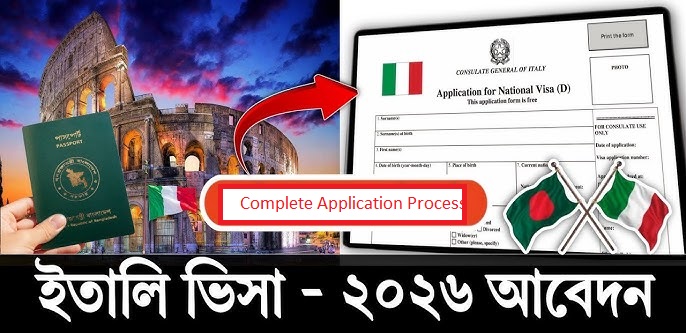
If you are planning to work in Italy in 2026, understanding the Italy work visa requirements, work permit process, documents, costs, and application steps is essential. Italy offers employment opportunities for foreign workers in sectors such as hospitality, construction, agriculture, healthcare, logistics, manufacturing, and skilled professions.
However, getting permission to work in Italy generally involves more than simply applying for a visa. For many non-EU citizens, the process begins with an Italian employer who is willing to hire them and apply for the necessary authorization to employ a foreign worker.
This guide explains the Italy work visa 2026 process step by step, including eligibility, the Nulla Osta work authorization, Decreto Flussi quota system, required documents, visa application, arrival in Italy, and residence permit procedures.
Important: Immigration rules, quotas, fees, and application procedures can change. Always verify the latest requirements with the Italian government, the Italian embassy or consulate responsible for your country, and the relevant Italian immigration authorities before submitting an application.
What Is an Italy Work Visa?
An Italy work visa is a long-stay visa that allows an eligible foreign national to enter Italy for employment when the applicable requirements have been satisfied.
For a non-EU citizen, the process commonly involves three major stages:
- An Italian employer offers you a job.
- The employer obtains the required authorization, commonly known as a Nulla Osta al lavoro.
- You apply for an Italian national long-stay visa and, after entering Italy, complete the residence-permit process.
The exact procedure depends on the type of employment, your nationality, your job, and the immigration rules applicable at the time of application.
Italy Work Visa 2026 Requirements
Before starting your application, you should understand the basic requirements.
For many employment categories, applicants will generally need:
- A valid passport
- A genuine employment offer or employment contract
- An eligible Italian employer
- Required work authorization (Nulla Osta)
- A completed visa application
- Passport-sized photographs meeting the applicable requirements
- Evidence requested by the Italian authorities
- Documents supporting your employment and qualifications where applicable
- Proof of accommodation or other documents if requested
- Payment of the applicable visa fee
- Any additional documents required by the Italian embassy or consulate
Additional requirements may apply depending on whether you are applying for seasonal work, non-seasonal employment, highly skilled employment, self-employment, or another category.
What Is Nulla Osta for Italy Work Visa?
One of the most important terms to understand is Nulla Osta.
A Nulla Osta al lavoro is an authorization related to the employment of a non-EU foreign worker in Italy. In the standard employment route, the Italian employer generally plays a central role in requesting this authorization through the relevant immigration authorities.
This means that, in many cases, a worker cannot simply submit an Italy work visa application independently without first having the required employment authorization.
The process can therefore be summarized as:
Job offer → Employer application → Nulla Osta → Visa application → Entry into Italy → Residence permit
This is why finding a legitimate Italian employer is one of the most important parts of the process.
Italy Decreto Flussi 2026 Explained
Another important concept for foreign workers is Decreto Flussi.
Italy uses a quota system that regulates the admission of certain non-EU workers for employment and other permitted activities. The government establishes the applicable quotas and categories through its immigration planning measures.
The available places can vary depending on the applicable decree and employment category.
Depending on the rules in force, quotas may cover areas such as:
- Seasonal employment
- Non-seasonal employment
- Certain self-employment categories
- Workers from particular countries or eligible categories
Because quota rules and application dates can change, applicants should check the latest official announcement before relying on information published elsewhere.
Who Can Apply for an Italy Work Visa?
Eligibility depends on the specific employment category.
Generally, a non-EU applicant seeking employment in Italy may need to have:
1. A legitimate job offer
You normally need an Italian employer prepared to employ you under the applicable immigration rules.
2. An eligible employment position
The position must fall within an employment category permitted under the relevant Italian immigration framework.
3. Required work authorization
Where applicable, the employer must obtain the necessary authorization before you apply for the visa.
4. A valid passport
Your passport must satisfy the validity and other requirements established by the visa authorities.
5. Supporting documentation
You must provide the documents requested by the Italian authorities.
6. Compliance with immigration requirements
The applicant must meet the applicable conditions for the selected visa category.
Meeting these conditions does not automatically guarantee visa approval.
Types of Italy Work Visas
Italy has different routes for foreign nationals depending on the nature of their work.
Seasonal Work Visa
Seasonal employment can include industries such as:
- Agriculture
- Tourism
- Hospitality
Seasonal employment is subject to specific rules and quotas where applicable.
Non-Seasonal Work Visa
Non-seasonal employment can cover various occupations depending on the applicable immigration quota and regulations.
Potential sectors can include manufacturing, construction, transportation, hospitality, and other permitted industries.
Highly Skilled Work
Highly qualified workers may have alternative immigration routes depending on their qualifications, profession, salary, and the specific Italian or EU immigration program applicable to them.
Self-Employment
Italy also has immigration provisions for certain foreign nationals who intend to engage in self-employment. These applications can have additional eligibility and documentation requirements.
Italy Work Visa Application Process: Step by Step
Here is a simplified overview of the standard process.
Step 1: Find an Italian Employer
The first step is generally to secure a genuine job offer from an employer in Italy.
Be cautious when dealing with recruiters or agents who promise guaranteed visas or employment in exchange for large upfront payments.
Before paying anyone, verify:
- The employer’s identity
- The company’s contact information
- The job position
- Salary and working conditions
- Employment contract
- Recruitment agency credentials, if applicable
A legitimate employment opportunity should be supported by verifiable information.
Step 2: Employer Applies for Work Authorization
After hiring you, the employer generally begins the required immigration procedure.
For many categories, this involves applying for the Nulla Osta al lavoro through the appropriate Italian immigration system.
The employer—not the worker—usually has the central role in this stage.
The authorities may examine whether the application meets the applicable quota and employment requirements.
Step 3: Wait for the Nulla Osta
Processing times can vary.
The application may be affected by:
- Application volume
- Available quotas
- Employment category
- Completeness of documents
- Administrative processing
- Verification procedures
Do not assume that an application will be approved within a specific number of days unless the relevant authority provides that timeframe.
Step 4: Apply for the Italy Work Visa
Once the required authorization has been issued, the worker can proceed with the visa application according to the instructions of the responsible Italian embassy or consulate.
Depending on your location, applications may be handled directly by the embassy/consulate or through an authorized visa application center.
You should check the official website of the Italian diplomatic mission responsible for your place of residence.
Step 5: Prepare Your Documents
Prepare the documents before your appointment.
Commonly requested documents may include:
- Passport
- Visa application form
- Recent photographs
- Nulla Osta
- Employment documentation
- Proof of relevant information requested by the consulate
- Accommodation-related documentation where applicable
- Other supporting documents
The exact document checklist can differ between countries and visa categories.
Therefore, do not rely exclusively on a generic online checklist.
Italy Work Visa Appointment
After completing the required application steps, you may need to schedule an appointment with the relevant Italian embassy, consulate, or authorized visa center.
During the appointment, authorities may:
- Review your documents
- Collect biometric information where applicable
- Ask questions about your employment
- Verify information related to your application
Answer questions truthfully and provide accurate information.
False documents or misleading information can lead to serious immigration consequences.
Italy Work Visa Cost in 2026
The Italy work visa fee depends on the visa category and the rules applicable at the time of application.
Applicants may also have additional expenses, such as:
- Visa application-center service fees
- Document translation
- Document legalization or certification where required
- Travel costs
- Medical or insurance-related expenses where applicable
- Residence permit fees after arrival
- Transportation and accommodation
Because fees can change, it is better to verify the current amount directly with the Italian embassy, consulate, or official visa application provider before paying.
Avoid websites that advertise a single “guaranteed total cost” without explaining which government fees and optional services are included.
How Long Does an Italy Work Visa Take?
There is no single processing time that applies to every applicant.
The total timeline can depend on:
- Employer processing
- Nulla Osta processing
- Quota availability
- Consular appointment availability
- Document verification
- Visa processing
- Residence permit procedures
For this reason, applicants should start preparing as early as possible and avoid making non-refundable travel arrangements until they understand the applicable visa requirements and receive the necessary approval.
What Happens After Arriving in Italy?
Getting the work visa is not necessarily the end of the immigration process.
After entering Italy, a non-EU worker generally needs to complete the required residence permit (Permesso di Soggiorno) procedure.
The applicable process depends on your visa and immigration category.
You may need to:
- Complete the required residence-permit application.
- Submit the necessary documents.
- Attend an appointment with the relevant authorities.
- Provide biometric information where required.
- Receive your residence permit.
The residence permit is important because it establishes your lawful status for staying and working in Italy under the applicable conditions.
Common Reasons Work Visa Applications Can Face Problems
There are several potential issues that can complicate an immigration application.
Incomplete documents
Missing documents can delay processing or create problems with the application.
Incorrect information
Differences between your application, employment documents, and passport information can result in additional scrutiny.
Fake employment offers
Applicants should be extremely careful about fraudulent job offers.
Unverified agents
Not every person offering immigration assistance is legitimate.
Quota limitations
If the relevant employment category is subject to quotas, availability can affect whether an application can proceed.
Failure to meet category requirements
An applicant may not qualify if the employment or personal circumstances do not meet the requirements of the selected immigration route.
How to Avoid Italy Work Visa Scams
Immigration scams are a serious concern.
Be particularly cautious if someone says:
- “Your Italy visa is guaranteed.”
- “Pay me and I will guarantee a job.”
- “You don’t need an Italian employer.”
- “You can skip the official application.”
- “I have a special connection at the embassy.”
- “Pay immediately or you will lose your visa.”
A legitimate immigration process cannot be guaranteed by an unofficial agent.
Before sending money or personal documents, verify the employer and check information through official Italian government or diplomatic sources.
Italy Work Visa 2026: Tips for a Successful Application
You can reduce avoidable problems by following these practical steps.
Check official sources
Always confirm current requirements with the relevant Italian authorities.
Keep documents consistent
Your passport, employment documents, application form, and supporting evidence should contain accurate and consistent information.
Don’t submit fake documents
Never use fraudulent employment contracts, certificates, bank statements, or other documents.
Keep copies
Maintain digital and physical copies of important documents.
Check your appointment instructions
Follow the specific instructions provided by the embassy, consulate, or visa center.
Be honest
If an officer asks questions about your employment or application, provide truthful answers.
Avoid unnecessary payments
You should understand exactly what you are paying for before using an immigration consultant or recruitment agency.
Frequently Asked Questions About Italy Work Visa 2026
Can I apply for an Italy work visa without a job offer?
For many standard employment routes, a genuine Italian employer and the required employment authorization are fundamental parts of the process. Other immigration categories can have different rules.
How much does an Italy work visa cost?
The applicable government visa fee depends on the visa category and current fee schedule. Additional costs may apply for services, documentation, translation, and the residence permit process.
Is Nulla Osta required for an Italy work visa?
For many employment-based immigration routes, yes. However, requirements can differ according to the specific category.
Can I work in Italy after entering with a work visa?
An employment visa is intended for the permitted employment purpose, but you must also complete the applicable residence-permit procedures after arrival.
Can I change employers in Italy?
Changing employment can involve immigration and employment-law requirements. Workers should check the current rules before changing jobs rather than assuming that their existing authorization automatically transfers.
How long can I stay in Italy with a work visa?
The duration depends on the visa and employment arrangement. After arrival, your residence status is governed by the applicable residence permit and Italian immigration rules.
Final Thoughts
Applying for an Italy work visa in 2026 can involve several stages, from finding an Italian employer to obtaining the required work authorization, submitting a visa application, entering Italy, and completing the residence-permit process.
The most important thing is to use accurate, current information and avoid shortcuts or unofficial promises. Immigration regulations, quotas, fees, and application procedures can change, so information published online should always be checked against the latest official sources.
If you are serious about working in Italy, start by identifying the appropriate employment category, finding a legitimate employer, preparing your documents, and checking the latest requirements from the Italian authorities responsible for your application.
Disclaimer: This article provides general informational guidance and is not legal or immigration advice. Italian immigration rules can change, and individual circumstances can affect eligibility. Always consult official Italian government or diplomatic sources, or a qualified immigration professional, for advice specific to your situation.
