

France is one of Europe’s most popular destinations for international workers. With opportunities across technology, engineering, healthcare, hospitality, construction, finance, research, and other sectors, the country continues to attract qualified professionals from around the world.
If you are planning to work in France in 2026, understanding the France work permit requirements, visa process, eligibility criteria, required documents, and application procedure is essential.
For many non-European Union nationals, working legally in France requires both appropriate authorization to work and the correct long-stay visa or residence status. The exact process depends on factors such as your nationality, occupation, qualifications, salary, employer, and length of employment.
This guide explains how to get a France work permit in 2026, who may qualify, which documents are commonly required, how the application process works, and what applicants should consider before moving to France.
Important: French immigration rules can change. Requirements, fees, processing procedures, and salary thresholds may vary according to the visa or residence category. Always verify the latest information with official French authorities before applying.
What Is a France Work Permit?
A France work permit is authorization allowing a foreign national to work legally in France under the conditions specified by French immigration authorities.
The terminology can be confusing because France has different immigration and residence categories. Depending on the applicant’s circumstances, work authorization may be connected to a visa, residence permit, or a specific authorization issued in connection with employment.
For many non-EU nationals, the employer plays an important role in the initial work authorization process.
The appropriate route can depend on:
- Your nationality
- Your employment contract
- Your occupation
- Your salary
- Your qualifications
- Your professional experience
- The duration of your employment
- Whether your profession is regulated
- Whether you qualify for a special talent or highly qualified-worker category
France Work Visa vs. France Work Permit
A France work visa and a work permit are related but are not necessarily the same document.
A work authorization concerns your legal ability to undertake employment, while a visa or residence document concerns your right to enter and/or remain in France.
For a typical non-EU employee, the process may involve:
Job offer → Employer work authorization application → Visa application → Travel to France → Residence formalities
However, the exact sequence varies according to the applicant’s nationality and immigration category.
EU, EEA, and Swiss citizens generally benefit from freedom-of-movement rules and do not normally need the same work authorization as non-EU nationals.
Who Can Get a France Work Permit in 2026?
There is no single eligibility requirement for everyone. France has different employment-based immigration routes.
However, many applicants will need to satisfy several key conditions.
1. You Have a Genuine Job Offer
For many employer-sponsored work routes, applicants need a genuine employment contract or job offer from a French employer.
The employment documentation may include details such as:
- Employer name
- Job title
- Salary
- Working hours
- Contract duration
- Workplace
- Job responsibilities
The position should satisfy the conditions applicable to the relevant work authorization.
2. Your Employer Meets the Requirements
In many cases, the French employer has responsibilities in the immigration process.
Depending on the situation, the employer may need to demonstrate that the employment complies with French labor and immigration rules.
Authorities can consider factors such as:
- Employment conditions
- Salary
- Employer status
- Position requirements
- Recruitment circumstances
- Applicable labor-market rules
Therefore, applicants should work with an employer familiar with hiring international workers.
3. You Have Appropriate Qualifications
Certain employment routes require relevant education, vocational training, professional experience, or other qualifications.
For professional positions, employers may request:
- University degrees
- Professional certificates
- Vocational qualifications
- Training certificates
- Evidence of professional experience
Some regulated professions have additional requirements.
4. Your Salary Meets Applicable Requirements
Salary can be an important factor in some French immigration categories.
Highly qualified professionals applying through specific residence categories may have minimum salary requirements.
Because salary thresholds can change, applicants should verify the current 2026 threshold applicable to their specific immigration route rather than relying on outdated online information.
5. You Meet Visa and Residence Requirements
Applicants may also need to satisfy general immigration requirements.
These can include:
- Valid passport
- Appropriate health coverage
- Proof of employment
- Supporting financial information where applicable
- Accommodation information where required
- Required photographs
- Application forms
- Additional supporting documents
The exact checklist depends on the visa and residence category.
France Work Permit Required Documents in 2026
A complete and accurate application is important. Missing documentation can result in delays or requests for additional information.
The following documents are commonly relevant to France employment-based applications, although not every applicant will need every item.
1. Valid Passport
You will generally need a valid passport that meets the applicable French visa requirements.
Check that your personal information is consistent across all documents.
2. Employment Contract or Job Offer
A copy of your employment contract or other required employment documentation is generally important for an employment-based application.
The document should clearly state relevant employment conditions.
3. Work Authorization Documentation
Where applicable, the employer or responsible authority will provide documentation relating to the work authorization.
The exact procedure depends on the applicant’s nationality and employment category.
4. Educational Certificates
You may need to provide evidence of your education and professional qualifications.
Examples include:
- Degree certificates
- Diplomas
- Vocational certificates
- Professional qualifications
- Training certificates
- Academic records
If documents are not in French, you may need an official translation depending on the authority and application requirements.
5. Proof of Professional Experience
Certain jobs or immigration categories may require evidence of relevant work experience.
This can include:
- Employment certificates
- Reference letters
- Previous contracts
- Professional records
- Payslips or other employment evidence where appropriate
6. Passport-Size Photographs
Applicants generally need photographs meeting French visa specifications.
Follow the official requirements rather than using an ordinary photograph.
7. Visa Application Forms
Complete the appropriate French visa application and provide all required information accurately.
Do not submit contradictory information across different documents.
8. Proof of Accommodation
Depending on your visa or residence procedure, you may be asked to provide information about where you will stay in France.
The exact requirement varies according to the application type.
9. Health Insurance or Other Health-Related Documentation
Depending on your visa and residence status, evidence of appropriate health coverage may be required.
Check the specific requirements applicable to your application.
10. Additional Supporting Documents
Authorities may request additional documents depending on your circumstances.
These may include:
- Birth certificate
- Marriage certificate
- Criminal-record documentation where applicable
- Financial documents
- Professional registration
- Language certificates
- Previous immigration documents
Always follow the checklist provided by the relevant French authority or visa application center.
Step-by-Step France Work Permit Application Process
The application process varies depending on the immigration category, but the following steps provide a useful general framework.
Step 1: Identify the Correct Work Visa or Residence Category
Before beginning the application, determine which immigration route applies to your circumstances.
Possible routes may include categories for:
- Salaried employees
- Highly qualified professionals
- Certain skilled workers
- Researchers
- Employees transferred within multinational companies
- Specific talent categories
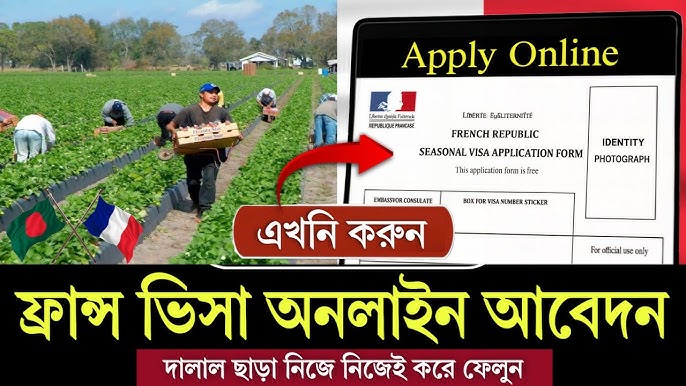
- Seasonal workers
Do not assume that every foreign worker uses the same France work visa.
Your job, qualifications, salary, nationality, and contract duration can affect the appropriate route.
Step 2: Find a Genuine French Employer
For many employment-based routes, the first major step is securing employment.
Use legitimate recruitment sources such as:
- Official employment services
- Company career pages
- Established job boards
- Professional recruitment firms
- Industry-specific platforms
When evaluating an overseas job offer, check the employer’s identity and employment terms carefully.
Be particularly cautious if someone asks for large payments in exchange for a guaranteed French work visa or guaranteed job.
No private individual can guarantee that French immigration authorities will approve your application.
Step 3: Employer Applies for Work Authorization Where Required
In many cases, the French employer has to complete part of the immigration procedure before the employee can proceed with the visa application.
The employer may need to provide information concerning:
- The job
- Salary
- Contract
- Company
- Recruitment circumstances
- Working conditions
The procedure depends on the employment category and applicable rules.
Step 4: Prepare Your Documents
Once the employment and work authorization requirements are established, prepare your visa documentation.
Create a checklist containing:
- Passport
- Employment documents
- Work authorization
- Qualification certificates
- CV
- Professional experience evidence
- Photographs
- Application forms
- Accommodation documentation if required
- Insurance documentation if required
- Any additional supporting documents
Make sure names, dates, job titles, and other important information are consistent.
Step 5: Complete the French Visa Application
Applicants who require a visa generally need to complete the appropriate French visa application process.
France uses official online visa services and designated visa application centers depending on the applicant’s country of residence.
You may need to:
- Complete an online application.
- Gather the required documents.
- Schedule an appointment.
- Submit documents and biometric information where required.
- Pay the applicable government fee.
- Attend an interview if requested.
Use official French government channels when completing this process.
Step 6: Attend Your Visa Appointment
Bring the required original documents and copies to your appointment.
You may be asked questions about:
- Your employer
- Your job
- Salary
- Qualifications
- Previous work experience
- Reason for moving to France
- Accommodation
- Employment plans
Answer truthfully and ensure your answers are consistent with your application.
Step 7: Wait for the Decision
Processing times vary.
Factors affecting processing can include:
- Visa category
- Nationality
- Country where you apply
- Completeness of documentation
- Employer verification
- Administrative workload
- Additional checks
- Requests for additional documents
Avoid making non-refundable arrangements based solely on an assumption that your visa will be approved.
Step 8: Travel to France
If your visa is approved, carefully check:
- Visa validity
- Entry dates
- Duration
- Number of entries
- Conditions attached to the visa
Travel only within the conditions of your authorization.
Step 9: Complete Residence Formalities
Depending on the visa issued, you may need to complete additional formalities after entering France.
Some long-stay visa holders must validate their visa online after arrival, while others may need to obtain or apply for a residence permit.
Follow the instructions associated with your specific visa.
France Talent Passport and Highly Qualified Workers
France has immigration routes designed for certain highly skilled professionals, researchers, entrepreneurs, and other qualifying categories.
One important category has historically been associated with the Talent Passport system, although terminology and legal categories can change as French immigration rules are updated.
Highly qualified workers may benefit from different conditions than ordinary salaried employees, depending on their profession, qualifications, salary, and employment arrangement.
Applicants should verify the current 2026 rules through official French government resources before relying on a particular category.
France Work Visa Fees in 2026
Visa and residence-related fees depend on the type of application and the applicant’s circumstances.
Fees can change, so applicants should verify the current amount through the official French visa or government website before making payment.
Other costs may include:
- Document translation
- Document certification
- Qualification recognition
- Travel
- Photographs
- Insurance
- Administrative services
Avoid paying unofficial fees to people who promise faster processing or guaranteed approval.
How Long Does a France Work Permit Take?
There is no universal processing time for every France work permit application.
The timeline can depend on:
- Type of employment
- Work authorization process
- Visa category
- Employer
- Applicant’s nationality
- Application location
- Completeness of documents
- Administrative workload
Applicants should begin the process as early as reasonably possible before their planned employment start date.
If your employer has a specific starting date in your contract, discuss the immigration timeline with the employer before making travel arrangements.
Can You Bring Your Family to France?
Depending on your immigration status and circumstances, certain foreign workers may be able to bring eligible family members to France.
Family immigration rules can depend on:
- Your residence status
- Length of residence
- Family relationship
- Income
- Accommodation
- Nationality
- Applicable immigration category
Spouses and children may have different eligibility requirements.
Do not assume that family members automatically receive the same immigration status as the principal worker. Check the rules applicable to your residence category.
Can You Change Employers in France?
Changing employers after obtaining work authorization may be subject to conditions.
Your ability to change jobs can depend on:
- Type of residence permit
- Work authorization conditions
- Contract
- Length of employment
- Current immigration status
Before accepting a new position, check whether additional authorization or notification is required.
Starting employment outside the conditions of your immigration status could create legal and immigration complications.
Common Reasons for France Work Visa Delays or Problems
Applicants can reduce avoidable problems by checking their applications carefully.
Common issues can include:
- Missing documents
- Incorrect application information
- Inconsistent personal details
- Incomplete employment documentation
- Qualification issues
- Unclear job responsibilities
- Missing translations
- Insufficient supporting evidence
- Failure to respond to requests from authorities
- Applying under an unsuitable category
A well-prepared application should contain genuine, accurate, and verifiable information.
How to Improve Your France Work Permit Application
Research before applying
Understand the immigration category that matches your circumstances instead of relying solely on generic “France work visa” information.
Verify your employer
Research the company and confirm that the employment offer is genuine.
Check qualification requirements
If your profession is regulated or your visa category requires specific qualifications, establish what recognition or authorization is necessary.
Prepare documents early
Translations, certifications, qualification recognition, and other administrative procedures can take time.
Use official sources
Immigration rules change. Government websites should be your primary source for current requirements.
Watch out for scams
Be skeptical of anyone promising:
- Guaranteed visa approval
- Guaranteed employment
- Guaranteed residence
- “Secret” visa channels
- Faster processing in exchange for unofficial payments
A legitimate immigration professional may provide assistance, but cannot guarantee the decision of French authorities.
Frequently Asked Questions About France Work Permits
Can foreigners work in France?
Yes. Foreign nationals can legally work in France when they meet the requirements of the applicable immigration and employment system.
The exact procedure depends on nationality, occupation, employment contract, qualifications, and residence status.
Do I need a job offer to get a France work visa?
For many employer-sponsored employment routes, yes. However, France has multiple immigration categories, and the requirements are not identical for every applicant.
Can I get a France work permit without a degree?
Potentially. A university degree is not necessarily required for every occupation or immigration route. Eligibility can depend on your vocational qualifications, professional experience, occupation, employment contract, and the specific residence category.
Is French language proficiency required?
Not every employment-based visa requires the same level of French-language proficiency.
However, language requirements can apply to certain immigration situations, professions, or integration procedures. Learning French can also improve your employment opportunities.
How much does a France work visa cost?
The cost depends on the visa and residence category and can change over time. Applicants should check the current official fee before applying.
Can I apply for permanent residence in France after working there?
Some foreign residents may eventually qualify for long-term or permanent residence if they satisfy the applicable legal requirements.
The eligibility conditions and required period of residence depend on the individual’s immigration status and circumstances.
Final Thoughts
Obtaining a France work permit in 2026 requires careful preparation and an understanding of the immigration category that applies to your situation.
For many non-EU workers, the process begins with finding a genuine French employer and determining whether the employer must obtain work authorization. The applicant then prepares the required documents, completes the appropriate visa procedure, attends an appointment where required, and completes any residence formalities after arriving in France.
The most important steps are to:
- Identify the correct immigration route.
- Secure a genuine employment opportunity where required.
- Confirm qualification and professional requirements.
- Prepare complete and accurate documents.
- Follow the official French visa procedure.
- Complete post-arrival residence formalities.
- Follow the conditions attached to your immigration status.
Because French immigration rules can change, applicants should confirm current 2026 requirements, fees, salary thresholds, and procedures through official French government sources before submitting an application.
Useful official resources include France-Visas, Service-Public.fr, the French Ministry of the Interior, and the relevant French consulate or visa application center.
