

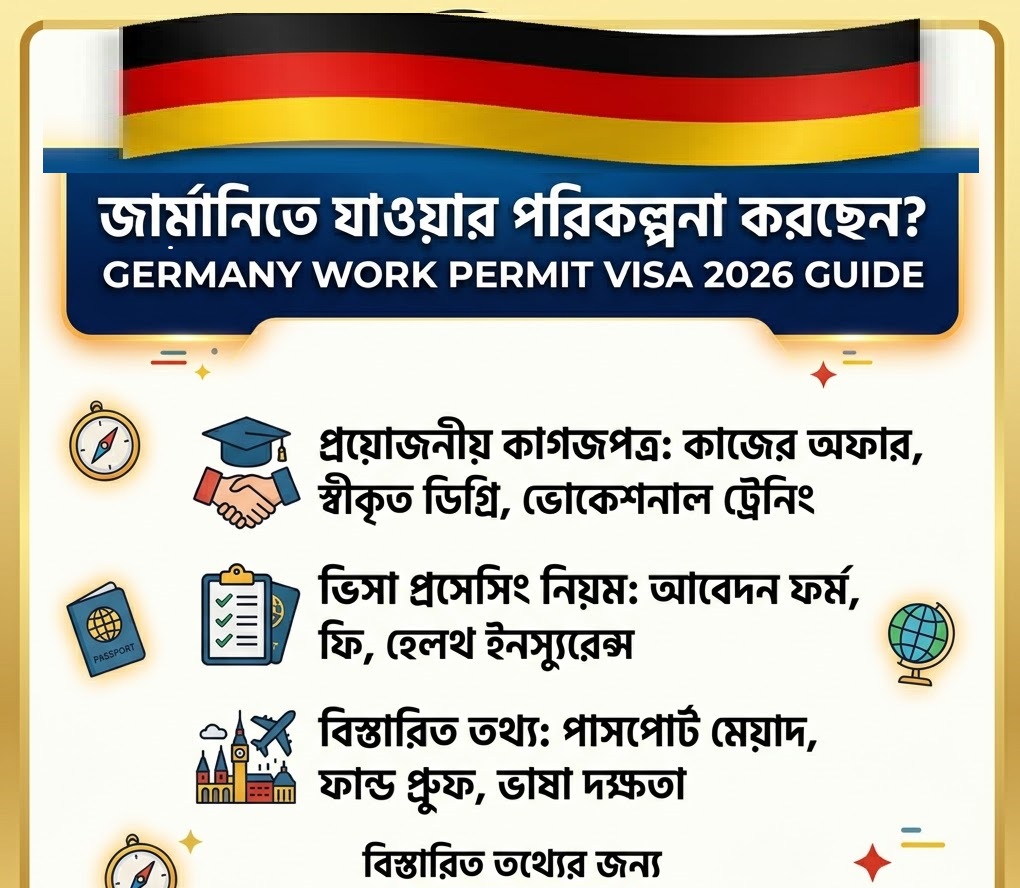
Germany remains one of the most attractive destinations for skilled professionals seeking international career opportunities. With a strong economy, high demand for qualified workers, competitive salaries, and excellent quality of life, Germany continues to welcome foreign talent through its work permit and employment visa programs.
If you are planning to work in Germany in 2026, understanding the latest work permit requirements, eligibility criteria, document checklist, processing times, and application procedures is essential. This comprehensive guide explains everything you need to know about the Germany Work Permit Visa 2026.
What Is a Germany Work Permit Visa?
A Germany Work Permit Visa is an official authorization that allows non-EU and non-EEA nationals to live and work legally in Germany. Depending on your qualifications, profession, and job offer, you may apply for different categories of German work visas and residence permits.
Germany offers various pathways for foreign workers, including:
- Skilled Worker Visa
- EU Blue Card
- Employment Visa
- Job Seeker Opportunity Card (where applicable)
- IT Specialist Work Permit
- Healthcare Professional Work Permit
The appropriate visa category depends on your educational qualifications, work experience, salary level, and employment contract.
Why Work in Germany in 2026?
Germany continues to experience labor shortages across several industries. As a result, employers actively recruit international workers.
Key Benefits of Working in Germany
- Competitive salaries
- Strong labor rights and worker protections
- Access to healthcare services
- Opportunities for permanent residence
- Family reunification options
- High standard of living
- Career growth opportunities
- International work environment
Many sectors, including engineering, information technology, healthcare, logistics, construction, and skilled trades, are expected to continue hiring foreign workers throughout 2026.
Germany Work Permit Visa 2026 Eligibility Requirements
To qualify for a Germany Work Permit Visa in 2026, applicants generally must meet certain requirements.
Basic Eligibility Criteria
1. Valid Job Offer
Most applicants need a valid employment contract or job offer from a German employer.
2. Relevant Qualifications
Applicants should possess qualifications relevant to the position.
Examples include:
- University degree
- Technical diploma
- Vocational training certificate
- Professional certifications
3. Work Experience
Many employers prefer candidates with relevant work experience, although specific requirements vary by occupation.
4. Financial Stability
Applicants may need to demonstrate sufficient financial resources during the initial stages of relocation.
5. Valid Passport
A valid passport is mandatory throughout the application process.
6. Health Insurance Coverage
Health insurance is generally required before obtaining a residence permit.
7. Clean Immigration History
Applicants should comply with immigration regulations and provide accurate information during the application process.
High-Demand Jobs in Germany for 2026
Germany is expected to continue facing worker shortages in several sectors.
Information Technology
- Software Developers
- Cybersecurity Specialists
- Data Analysts
- Cloud Engineers
- AI Specialists
Healthcare
- Nurses
- Caregivers
- Medical Technicians
- Physicians
Engineering
- Mechanical Engineers
- Electrical Engineers
- Civil Engineers
- Industrial Engineers
Skilled Trades
- Electricians
- Welders
- Plumbers
- HVAC Technicians
Logistics and Transportation
- Truck Drivers
- Warehouse Specialists
- Supply Chain Managers
Construction
- Construction Workers
- Site Supervisors
- Project Managers
Required Documents for Germany Work Permit Visa 2026
Document requirements may vary depending on your nationality and visa category. However, most applicants need the following:
Essential Documents Checklist
Valid Passport
Your passport should generally remain valid beyond your planned period of stay.
Visa Application Form
Complete the appropriate visa application form accurately.
Passport-Sized Photographs
Photos should meet German visa photo requirements.
Employment Contract or Job Offer
Provide an official contract or offer letter from a German employer.
Educational Certificates
Examples include:
- Degree certificates
- Diplomas
- Vocational qualifications
Professional Experience Documents
Examples include:
- Employment certificates
- Recommendation letters
- Experience letters
Updated CV or Resume
Include your educational and employment history.
Proof of Accommodation
Examples include:
- Rental agreement
- Hotel reservation
- Employer-provided accommodation confirmation
Health Insurance
Proof of valid health insurance coverage may be required.
Proof of Financial Resources
Depending on circumstances, applicants may need to provide evidence of financial support.
Visa Fee Payment Receipt
Provide proof of payment if applicable.
Germany EU Blue Card in 2026
The EU Blue Card is a popular option for highly qualified professionals.
Benefits of the EU Blue Card
- Faster route to long-term residence
- Attractive salary opportunities
- Family reunification benefits
- Mobility within certain EU countries
Eligibility requirements and salary thresholds can change periodically. Applicants should verify current requirements through official German government sources before applying.
Germany Work Permit Application Process 2026
The process may vary slightly depending on your country of residence and visa category.
Step 1: Secure a Job Offer
The first step is obtaining a valid job offer from a German employer.
Job search platforms commonly used include:
- Indeed
- StepStone
- Make-it-in-Germany Portal
- Company career websites
Step 2: Gather Required Documents
Collect all supporting documentation before starting the application process.
Ensure:
- Documents are complete
- Information is accurate
- Required translations are prepared if necessary
Step 3: Complete the Visa Application
Fill out the official visa application form carefully.
Double-check:
- Personal details
- Employment information
- Passport details
Mistakes can delay processing.
Step 4: Schedule a Visa Appointment
Book an appointment with the German embassy or consulate responsible for your location.
Appointment availability may vary depending on demand.
Step 5: Attend the Visa Interview
During the appointment, applicants may be asked questions regarding:
- Employment plans
- Qualifications
- Intended residence
- Financial arrangements
Provide honest and accurate answers.
Step 6: Submit Biometrics
Applicants may need to provide:
- Fingerprints
- Photograph
- Signature
Depending on local procedures.
Step 7: Wait for Processing
After submission, authorities review the application and supporting documents.
Additional information may be requested if needed.
Step 8: Receive Visa Decision
If approved, the visa will be issued according to applicable regulations.
Applicants can then prepare for travel to Germany.
Step 9: Register Residence in Germany
After arrival, workers typically must register their address with local authorities.
Step 10: Apply for Residence Permit
Depending on the visa category, applicants may need to obtain a residence permit after arrival.
Germany Work Permit Processing Time in 2026
Processing times vary based on:
- Visa category
- Applicant nationality
- Embassy workload
- Completeness of documents
- Employer verification procedures
Typical Processing Factors
Applications may take several weeks or longer depending on individual circumstances.
To avoid delays:
- Apply early
- Submit complete documentation
- Follow embassy instructions carefully
- Attend appointments on time
Because processing times can change, applicants should consult official German immigration authorities for the most current information.
Can Family Members Join You in Germany?
Many work permit holders may be eligible to bring family members under family reunification provisions.
Eligible family members may include:
- Spouse
- Registered partner (where applicable)
- Dependent children
Additional requirements may apply depending on visa category and personal circumstances.
Tips to Improve Your Germany Work Visa Approval Chances
Prepare Accurate Documentation
Ensure all information is correct and consistent.
Verify Qualification Recognition
Certain professions require recognition of foreign qualifications.
Maintain Valid Health Insurance
Health insurance is an important requirement for many immigration processes.
Apply Early
Start preparations well before your intended travel date.
Follow Official Guidance
Always rely on official German government and embassy resources for the latest requirements.
Common Reasons for Application Delays
Applications may experience delays due to:
- Missing documents
- Incomplete application forms
- Inconsistent information
- Verification procedures
- High application volumes
Careful preparation can help reduce the risk of delays.
Frequently Asked Questions (FAQs)
Is a job offer required for a Germany Work Permit Visa?
In many cases, a valid job offer is required. Requirements can vary depending on the specific immigration pathway.
Can I change employers after arriving in Germany?
Conditions vary according to your permit type and individual circumstances. Consult relevant authorities before making employment changes.
Do I need German language skills?
Language requirements depend on the job and visa category. Some positions require German proficiency, while others may operate primarily in English.
Can I apply for permanent residence later?
Certain residence permits may provide pathways toward long-term residence, subject to meeting legal requirements.
Is Germany actively hiring foreign workers?
Germany continues to recruit international talent in various sectors experiencing labor shortages.
Final Thoughts
Germany remains one of the most attractive destinations for international professionals in 2026. Its strong economy, growing demand for skilled workers, excellent employee protections, and long-term career opportunities make it a preferred choice for many job seekers worldwide.
Successfully obtaining a Germany Work Permit Visa requires careful preparation, accurate documentation, and compliance with current immigration requirements. By understanding the eligibility criteria, gathering the correct documents, and following the application process step by step, applicants can improve their chances of a smooth and successful application experience.
Before submitting any application, always consult official German government immigration resources and the German embassy or consulate responsible for your location to ensure you have the most up-to-date information.
